Big Data is the huge amount of data which can't be stored and processed using the traditional methods within the given time frame.

So, The Question arises that how much big should be the big data.
Generally, people think that the data whose size is more than GB, TB, PB is big data. But, it's not the case.
some data which is small in size can be a big data.
For example
100mb of a document is to be sent by email(we generally use Gmail), but it's not possible because Gmail doesn't support this feature.
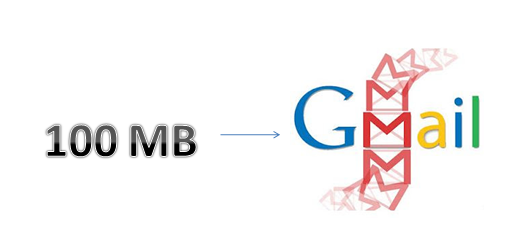
That's why 100 MB of the document can be referred to as a big data for email service.
let's understand bigdata with another Example
1TB of data is given a person, 1 TB contains images which he has to edit and process in a particular amount of Time, for a normal user it will be a Bigdata.

Some analysis of data in the real world
- Facebook-100TB /day
- twitter- 4400 twites /day
- LinkedIn - 10TB/day
- Google+ - 10TB/day
- Youtube - 48h of fresh video /minutes
Now you can understand how much the data is present currently. Managing data becoming crucial day by day.
Because of this HADOOP comes in picture.
Below are the fields which come under big data
- Search Engine Data
The Data we generate while searching, it stored by search engine provider. They analyze the data and get to know more about the user.
list of top 10 Search Engines in the world
- Stock Exchange Data
Stock market data is stored, all the data changes according to time.
- Social Media Data
Social media like Facebook, Youtube etc contains a huge amount of data. All the comments, likes, Dislikes, Image, video are stored.
- Black Box Data
The black box is installed in the airplane, jets etc
All the data generated while traveling is stored in it like the speed, weather, oxygen level etc.
It is used for analysis if something went wrong with Airplane.
Thus Big Data includes huge volume, high velocity, and extensible variety of data. The data in it will be of three types.
- Structured data − Relational data.
- Semi Structured data − XML data.
- Unstructured data − Word, PDF, Text, Media Logs.
Veracity, Velocity, Volume, Value, Variety.

Volume
Volume refers to the incredible amounts of data generated each second from social media, cell phones, cars, credit cards, M2M sensors, photographs, video, etc. The vast amounts of data have become so large in fact that we can no longer store and analyze data using traditional database technology. We now use distributed systems, where parts of the data are stored in different locations and brought together by software. With just Facebook alone there are 10 billion messages, 4.5 billion times that the “like” button is pressed, and over 350 million new pictures are uploaded every day. Collecting and analyzing this data is clearly an engineering challenge of immensely vast proportions.
Velocity
let’s talk about velocity. Obviously, velocity refers to the speed at which vast amounts of data are being generated, collected and analyzed. Every day the number of emails, twitter messages, photos, video clips, etc. increases at lightning speeds around the world. Every second of everyday data is increasing. Not only must it be analyzed, but the speed of transmission and access to the data must also remain instantaneous to allow for real-time access to a website, credit card verification and instant messaging. Big data technology allows us now to analyze the data while it is being generated, without ever putting it into databases.
Value
When we talk about value, we’re referring to the worth of the data being extracted. Having endless amounts of data is one thing, but unless it can be turned into value it is useless. While there is a clear link between data and insights, this does not always mean there is value in Big Data. The most important part of embarking on a big data initiative is to understand the costs and benefits of collecting and analyzing the data to ensure that ultimately the data that is reaped can be monetized.
Best books for big data which you can prefer for more knowledge
Related post
What is blockchain?
What is cloud computing?
MBA?
Best jobs for 2020?
Explanation is very well with understanding example.
ReplyDeleteThanks bro.
ReplyDeleteExplanation is....awes awe
ReplyDeleteWith understanding and currently example
I like it..🙂